Which Way Did It Move? Diagnosing and Overcoming Directional Motion Blindness in Video-LLMs
NeurIPS 2026
Research Office
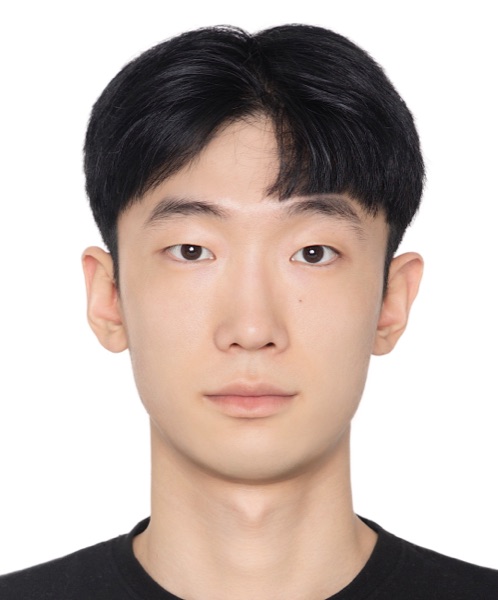
Post-Master Researcher
Vision and Learning Lab, Kyung Hee University
I work on trustworthy multimodal video understanding — and I'm now extending it toward Physical AI.
Prefer a plain page? Classic site ↗
You are visitor — thanks for stopping by.
Click a numbered object to open it · drag to look around
I recently completed my M.S. in Computer Science at Kyung Hee University and am continuing my research at the same lab as a Post-Master Researcher, advised by Prof. Jinwoo Choi. I am currently seeking PhD positions in the United States (Fall 2027).
My research centers on trustworthy multimodal video understanding across vision, language, and audio. Rather than a single technique, I'm drawn to the whole picture — how these models are trained, what they actually learn, and whether their reasoning is grounded, reliable, and interpretable.
Before graduate school, I earned dual bachelor's degrees in Biomedical Engineering and Electronics Engineering. That interdisciplinary background — signal processing, embedded systems, and AI — still shapes how I approach research today.
Video-language-audio models we can rely on — with grounded reasoning, hallucination mitigation, and interpretability at the core, so an answer reflects what truly happens on screen.
A broad curiosity about the learning process itself — how these models are trained, what representations they form, and why they succeed or fail — rather than any single technique.
Extending video understanding toward Physical AI — treating video as the modality through which machines perceive, reason about, and eventually act in the physical world.
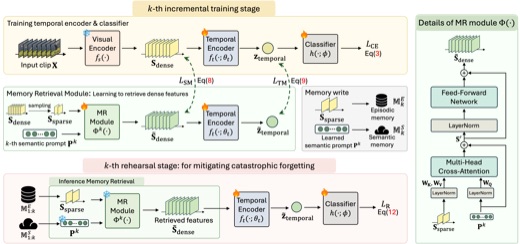
This thread runs across my work: diagnosing failure modes of Video-LLMs in DeltaDirect (NeurIPS 2026), concept-level explanation in DANCE (NeurIPS 2025 Spotlight), audio–visual reasoning in CA²ST (IEEE TPAMI 2026), and continual learning in ESSENTIAL (ICCV 2025 Highlight).
* equally contributed first authors · † corresponding author
NeurIPS 2026
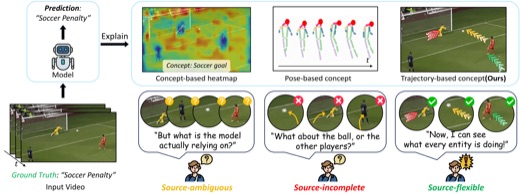
NeurIPS 2026
Paper coming soon
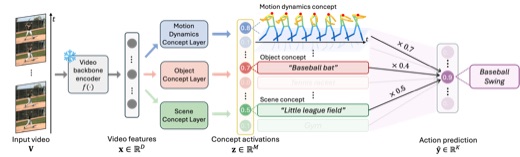
CVPR 2025 · XAI4CV WorkshopSpotlight · top 16.7%
IEEE TPAMI 2026
arXiv 2024 Preprint, under review
Journal of Appropriate Technology 8(2), 2022
I completed my M.S. and am now a Post-Master Researcher at the Vision and Learning Lab. I am actively looking for PhD positions in the United States for Fall 2027, focusing on trustworthy multimodal video understanding, Physical AI, and reliable video-language models. If you think I could be a good fit for your group, I would love to hear from you — jong980812@khu.ac.kr.
Two of our papers have been accepted to NeurIPS 2026! “Which Way Did It Move? Diagnosing and Overcoming Directional Motion Blindness in Video-LLMs” (DeltaDirect), which diagnoses and fixes directional motion blindness in Video-LLMs, and “TRACE: Trajectory-Aware Concepts for Explainable Video Understanding”, which extends concept-based explanation to object trajectories over time. Grateful to all my collaborators, including Wooil Lee, Junpyo Hong, Hyuntak Lee, Tuomas Oikarinen, Tsui-Wei Weng, and Jinwoo Choi.
We released “Which Way Did It Move? Diagnosing and Overcoming Directional Motion Blindness in Video-LLMs”. We identify a fundamental failure mode of Video-LLMs — directional motion blindness — and introduce DeltaDirect, a parameter-efficient motion-change head that raises LLaVA-Video-7B from 27.6% to 85.4% on real-world direction QA. See arXiv (2605.22823) and the project page.
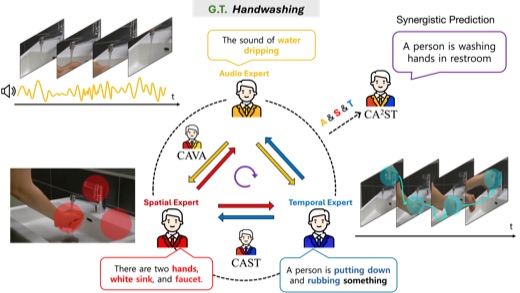
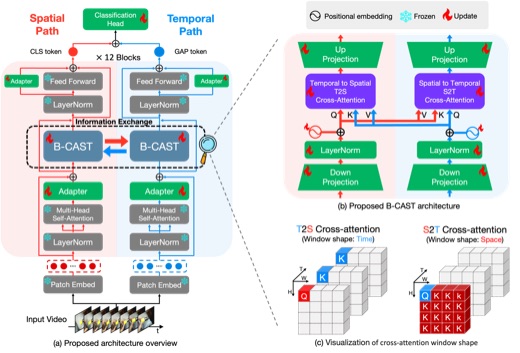
Our paper “CA2ST: Cross-Attention in Audio, Space, and Time for Holistic Video Recognition” has been accepted to IEEE TPAMI, one of the most prestigious journals in computer vision and AI. This work extends our NeurIPS 2023 paper CAST with audio-visual reasoning in a unified cross-attention framework. Huge thanks to my collaborators Joohyun Chang and Jinwoo Choi. arXiv (2503.23447)
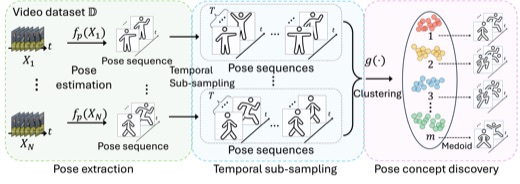
Our paper “Disentangled Concepts Speak Louder Than Words: Explainable Video Action Recognition” has been accepted to NeurIPS 2025 as a Spotlight (3.5% acceptance rate). The work disentangles motion dynamics, objects, and scenes into human-understandable concepts — strong performance with clear explanations of model decisions. Grateful to my collaborators Wooil Lee, Gyeong-Moon Park, Seong Tae Kim, and Jinwoo Choi.
My paper “ESSENTIAL: Episodic and Semantic Memory Integration for Video Class-Incremental Learning” has been accepted to ICCV 2025 as a Highlight (top 2.9%) — after three submission attempts. The journey was filled with revisions and rejections, but it proved to be an incredible learning experience. Thank you to everyone who supported me along the way.
I am now moving toward Physical AI, studying video as the primary modality through which machines perceive, reason about, and eventually act in the physical world.
Extending video understanding toward Physical AI — treating video as the modality through which machines perceive, reason about, and eventually act in the physical world.
Seeking PhD positions in the U.S. — Fall 2027
If you think I could be a good fit for your group, I would love to hear from you.
jong980812@khu.ac.krWhether it's about PhD opportunities, research collaboration, or just to say hi — my inbox is always open.
I am always open to collaboration and discussion on computer vision, multimodal AI, and reliable video understanding. Feel free to reach out!